There is a particular kind of irony in watching a company spend decades building one of the most successful closed gaming ecosystems in history, only to discover that the people most capable of dismantling its technical barriers are the same people who understand its technology best.
Sony built the PlayStation around control. Control over the hardware, the operating system, the distribution of games, and the experience consumers receive when they buy into its ecosystem.
For decades, that strategy worked exceptionally well.
Then came a generation of engineers who decided that understanding how the PlayStation works was not enough. They wanted to make its software work somewhere else.
Now, in October 2026, projects such as AnyPS5 and KytyPS5 are demonstrating just how much progress independent developers can make against what once appeared to be an almost insurmountable engineering challenge.
And the numbers coming out of AnyPS5 are particularly interesting.
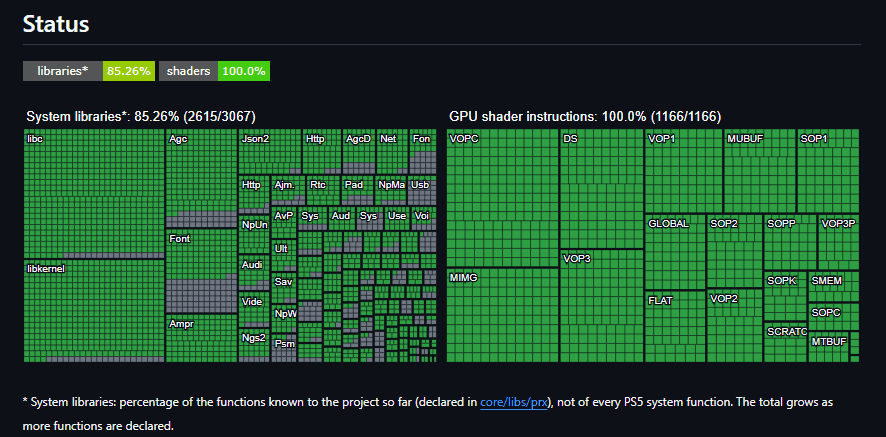
The project has reached 100% coverage of its tracked GPU shader instructions. Its implementation tracker also reports approximately 84.8% coverage of the system-library functions currently declared in its codebase.
Let that sink in.
A project attempting to run PlayStation 5 software on ordinary PCs has implemented every GPU shader instruction in its tracked list, while working through thousands of functions needed to recreate the software environment those games expect.
No, this does not mean every PS5 game runs on a laptop. It does not mean Sony's console has suddenly become obsolete.
But it does mean something important: the engineering barriers surrounding a closed gaming platform are not necessarily permanent.
And when you combine determined engineers, open-source collaboration, and increasingly capable AI tools, you get a situation that Sony cannot simply solve by releasing another firmware update or issuing another corporate statement.
The gates are opening.
The question is whether Sony understands what happens next.
1. AnyPS5 just crossed a milestone worth paying attention to
Let's start with the technical achievement, because the numbers are more interesting than the headlines.
AnyPS5 is an open-source project designed to port PlayStation 5 executables to Windows and Linux. Rather than using conventional full-system emulation, it takes advantage of the architectural similarities between the PS5 and modern PCs.
The PS5 uses an AMD Zen 2-based CPU and a custom RDNA 2-based GPU. That shared architectural foundation creates opportunities to translate software and graphics instructions into forms that a PC can execute.
AnyPS5 uses a relinker to convert executable files into the host system's native format, alongside implementations of PlayStation system libraries that provide the functions the original software expects. Its shader recompiler produces SPIR-V, a representation that can be consumed by Vulkan-compatible graphics implementations.
In other words, it is trying to bridge the gap between two software environments without recreating the entire console in the traditional sense.
And its progress tracker now reports:
- 100% GPU shader instruction coverage: all 1,166 instructions in its tracked list are recognized by the decoder.
- Approximately 84.8% system-library coverage: around 2,575 of roughly 3,038 currently declared functions have been implemented, with exact counts varying between snapshots.
- A growing compatibility effort: developers are working through the missing functions, graphics behavior, and other obstacles that prevent more games from running correctly.
These numbers come with important qualifications. The shader figure measures recognition of instructions in the project's defined list, not proof that every shader behaves perfectly in every game. The library percentage covers functions already declared in the project, not every function that exists in the PS5 firmware. That list can grow as developers discover more of the system.
And the distinction between implementing an instruction and running an actual game is enormous.
Nevertheless, this is substantial engineering progress.
A project that has implemented every instruction in its tracked GPU list has removed one major category of missing functionality from its development roadmap. That gives developers a stronger foundation for investigating the remaining problems.
It does not eliminate those problems, but it changes what they can focus on next.
Source: AnyPS5's official repository and development progress tracker.
2. The really interesting part is what AnyPS5 doesn't need to do
Traditional emulation is an enormous undertaking.
An emulator generally needs to reproduce enough of the original machine's hardware and software behavior that a game behaves as if it were running on the real console.
That includes processor behavior, memory management, graphics, system calls, synchronization, and all the strange edge cases developers discover after years of real-world use.
AnyPS5 approaches the problem differently.
Because the PS5 and modern PCs share the x86-64 instruction-set family, the project can focus on translating executables and recreating the necessary software interfaces rather than emulating the entire processor from scratch.
That is not a shortcut that makes the problem easy. It is a different way of attacking the problem.
A game still expects the operating-system services, graphics behavior, memory semantics, and other facilities available on the PS5. Those expectations have to be satisfied, translated, or otherwise handled.
But the underlying philosophy is powerful: you do not necessarily have to reproduce an entire machine if you can translate the software and provide the environment it needs.
This is the same broad family of ideas that makes compatibility layers and binary translators so interesting in computing.
And it opens the door to a different kind of progress.
Instead of treating the console as an indivisible black box, developers can work through individual interfaces, functions, instructions, and behaviors. They can measure their progress, isolate failures, and steadily expand what works.
That makes the project's development milestones especially meaningful.
The objective isn't simply to make a PS5 game boot once in a laboratory. It is to develop a reusable foundation that could eventually support many different games.
The difficult work is still ahead, but the approach is worth watching.
3. Enter KytyPS5: another team attacking the same walls
AnyPS5 is not the only project making this story interesting.
KytyPS5 is pursuing PlayStation 5 compatibility through a more conventional emulation architecture. It has been working on the graphics, system behavior, and other components needed to run console software on Windows and Linux.
The project has attracted attention through demonstrations involving demanding commercial games, including Grand Theft Auto V.
Its approach differs from AnyPS5's executable translation strategy, and their achievements should not be treated as interchangeable. A game running under one project does not automatically mean the other can run it, and a milestone in one codebase does not establish equivalent progress in another.
But the existence of multiple approaches is precisely what makes the scene interesting.
Different developers are exploring different solutions to overlapping problems.
One approach may expose a weakness in another. A technique developed for a particular graphics operation may inspire a different implementation. A bug report from one project may help someone understand an unexpected behavior elsewhere.
That is the strength of open-source engineering.
Knowledge accumulates across people and projects. Progress doesn't have to come from one enormous organization with a single development roadmap.
It can come from dozens of independent contributors working on the specific problems they understand best.
And Sony cannot control all of them.
Source: KytyPS5 on GitHub.
4. The engineers were already here. AI is changing the economics.
Let's talk about artificial intelligence.
It would be misleading to claim that AI single-handedly created AnyPS5 or solved PlayStation 5 compatibility. The public milestones alone do not establish how much AI contributed to the development of these projects.
The engineering achievement belongs to the people writing, reviewing, testing, and maintaining the software.
But AI-assisted development is changing the economics of difficult engineering work.
Think about the amount of code involved in recreating a complex software environment.
There are functions to implement, instructions to decode, tests to write, errors to investigate, edge cases to understand, and compatibility problems to isolate. Much of the work is repetitive, but the consequences of getting it wrong can be complicated.
AI tools can help developers navigate unfamiliar codebases, draft test cases, generate boilerplate, explore implementation alternatives, interpret error messages, and automate parts of the debugging process.
They can also produce garbage.
A model can confidently generate an incorrect implementation. It can misunderstand a specification or suggest a solution that works in a simple test but breaks under a real workload. Low-level systems programming is particularly unforgiving of subtle mistakes.
Human expertise remains essential.
The real advantage is that an experienced engineer can use these tools to explore more possibilities, automate more routine work, and spend more time on the difficult questions that require judgment.
Multiply that across an open-source community.
One developer can investigate a graphics issue while another works on a library implementation. A third can build a test harness, and another can review the resulting changes. AI may help each person move faster without replacing the need for technical understanding.
That is where the economics become interesting.
A small team no longer necessarily needs the same amount of repetitive engineering labor that a similar project would have demanded years ago.
This doesn't make a handful of developers equivalent to Sony's entire engineering organization. Sony has proprietary documentation, extensive testing resources, hardware access, and years of experience developing for its platform.
But independent developers do not need to match Sony across every dimension.
They need to make progress on one specific problem at a time.
And those problems can now be attacked by people working around the world, sharing code and discoveries at a pace that a centralized organization cannot fully dictate.
AI does not have to make reverse engineering easy to make it more accessible. It only has to make enough of the work faster that more people can participate.
That is the part corporations should take seriously.
5. Why would engineers spend their time doing this?
Because technical curiosity is a powerful thing.
Some developers work on emulators because they want to preserve games. Others are interested in operating systems, graphics programming, compiler design, or the challenge of understanding a complex piece of hardware.
Some simply want to see whether they can solve a problem everyone else considers impractical.
And some people are frustrated with the direction the industry is taking.
That frustration matters, but it is important not to oversimplify the motivations of individual developers. We cannot assume that the people behind AnyPS5 or KytyPS5 are motivated by anger at Sony, and there is no evidence that corporate frustration alone explains their progress.
Still, closed platforms create a recurring contradiction.
The more sophisticated a platform becomes, the more knowledge is required to develop for it. The engineers who acquire that knowledge become increasingly capable of understanding the platform's limitations, exploring its undocumented behavior, and creating alternatives.
The platform holder wants those engineers to build within its ecosystem.
But technical knowledge does not belong exclusively to the corporation that employs the people who possess it.
Once someone understands a system, they can apply that understanding to new problems, independent projects, and research that falls outside the original business plan.
And the internet makes it possible to distribute the results.
A developer can publish a tool. Another can test it. A third can improve it. A fourth can document an unexpected behavior that saves everyone else hours of investigation.
The corporation may own its proprietary code and intellectual property, but it cannot own every idea that an engineer develops while studying how a system works.
This is where a closed platform becomes vulnerable in a way that has little to do with conventional competition.
The threat is not necessarily a rival corporation.
Sometimes, it is a distributed community of people who are interested in solving the same problem for entirely different reasons.
6. Sony's corporate strategy may be creating its own backlash
Now we get to the uncomfortable question.
Why does any of this matter to Sony's business?
Because PlayStation isn't just a console. It is an ecosystem.
Sony sells hardware, publishes games, operates digital distribution, and benefits from keeping players engaged with its platform. Exclusive software and platform-specific services help make the PlayStation valuable.
From a commercial perspective, controlling the ecosystem is understandable.
Sony invests heavily in hardware development, game production, developer support, and infrastructure. It has legitimate interests in protecting its intellectual property and preventing unauthorized distribution of its products.
But protecting a business is not the same thing as maximizing control over every aspect of the customer experience.
There is a point at which restrictions can undermine goodwill.
Players may want to preserve games they have purchased. They may want to play older titles on newer hardware. They may want to choose their preferred operating system or gaming device. Developers may want broader distribution for their work.
These are not inherently unreasonable desires.
Yet the console industry has historically been built around controlled hardware and software environments. Consumers generally buy into the platform on the terms offered by the manufacturer.
That arrangement works while the benefits outweigh the frustrations.
But what happens when the technical barriers that reinforce that arrangement become easier to challenge?
The timing is particularly interesting because reporting in September 2026 linked Sony's decision to halt certain PC ports of its first-party single-player games with renewed interest in PS5 compatibility projects. That does not prove the policy caused AnyPS5's development, but it illustrates how commercial decisions can influence the public conversation around platform openness.
Source: Tom's Hardware's reporting on AnyPS5 and the changing PC-port strategy.
If consumers believe that a company is making its ecosystem more restrictive, alternatives become more attractive. If developers believe a platform is unnecessarily closed, independent tools become more interesting. If preservation advocates feel that commercial priorities are leaving important games behind, projects that preserve access can gain cultural significance.
That is the potential backlash.
Not every restriction is greed. Not every emulator developer is an activist. Not every player wants to leave the console ecosystem.
But a company that relies heavily on controlling access should pay attention when the technical barriers supporting that control begin to weaken.
Because goodwill is part of the product, too.
7. The danger isn't that every PS5 game will run tomorrow
Let's bring some perspective to this.
As of October 2026, AnyPS5 remains an experimental project. Its official compatibility information identifies Dreaming Sarah, a relatively simple 2D platformer, as its verified playable game.
That is a long way from running demanding titles such as Marvel's Spider-Man 2, God of War Ragnarök, or other modern AAA games with reliable performance and complete functionality.
The project still needs to handle missing system functions, complex graphics behavior, and game-specific problems. Some games may rely on undocumented behavior or components that are particularly difficult to reproduce. Others may require substantial debugging even after the underlying interfaces have been implemented.
A 100% shader-instruction coverage figure is not a 100% compatibility figure.
Likewise, 84.8% of the currently declared system-library functions does not mean 84.8% of PS5 games will work.
One missing function could prevent a game from starting. A single graphics issue could make an otherwise functional title unplayable. And discovering more system functions can increase the amount of work required.
There is no reliable way to convert these percentages into a date when the average PC gamer will be able to play an arbitrary PS5 title.
But that is not the only way to measure the project's significance.
The important change is that developers are building reusable infrastructure. Each correctly implemented function, translated instruction, and resolved compatibility problem can contribute to a foundation that supports more software in the future.
Progress can compound.
And Sony doesn't need to lose control of every game for that progress to matter.
It only needs enough compatibility to change what consumers and developers believe is possible.
8. Pandora's box is about expectations, not just emulation
Imagine a future in which a growing collection of PlayStation games can run on ordinary PCs without requiring the original console.
Imagine people preserving games beyond the commercial lifespan of their hardware. Imagine independent developers studying software behavior that was previously difficult to investigate. Imagine compatibility tools becoming sufficiently mature that users can choose where and how to run more of the games they own.
That future is not guaranteed.
It would require extensive engineering work, and technical compatibility does not automatically grant permission to distribute copyrighted games, proprietary firmware, or other protected components. Users and developers must still consider applicable laws and software licenses.
But if the technology matures, the implications extend beyond convenience.
It changes the relationship between the platform and the player.
A console manufacturer can decide which games it officially publishes on PC. It can decide which services it supports and which hardware configurations it tests.
But it cannot necessarily prevent independent developers from investigating whether the software can run elsewhere.
The more mature those independent tools become, the less absolute the manufacturer's control over the technical environment may be.
And that can influence consumer expectations.
Once people see that a game can potentially be preserved outside its original hardware, they may begin asking why it is tied to that hardware in the first place. Once developers see that a platform's software environment can be reproduced or translated, they may become more interested in interoperability. Once compatibility projects demonstrate meaningful results, more contributors may decide the work is worth pursuing.
This is the Pandora's box.
It isn't that one project will suddenly make the PlayStation 5 irrelevant.
It is that the existence of a viable path toward greater software independence can change the way people think about closed platforms.
And once those expectations change, they are difficult to reverse.
9. Could this actually be Sony's downfall?
I wouldn't claim that AnyPS5 or KytyPS5 will destroy PlayStation. That would be a dramatic headline, not a serious prediction.
Sony has enormous advantages: a large installed base, established distribution, recognizable franchises, developer relationships, and hardware designed to provide a consistent gaming experience.
Most players do not want to spend their evenings debugging a compatibility layer. They want to turn on their console and play.
Convenience remains a powerful competitive advantage.
Even if PS5 compatibility on PC improves dramatically, Sony could continue to sell millions of consoles and games. Emulation and executable translation may coexist with the official platform for years without seriously threatening its commercial position.
But corporate decline does not always begin with a competitor offering a better product.
Sometimes, it begins with a company failing to recognize that the environment around its business is changing.
If Sony assumes that proprietary hardware will always be an insurmountable barrier, it may underestimate the pace of independent development.
If it assumes that consumers will accept any restriction because they love its games, it may underestimate the importance of goodwill.
If it assumes that a small open-source project cannot matter until it supports every game, it may overlook the cumulative impact of incremental progress.
The real danger is strategic complacency.
A company that adapts can turn technological change into an opportunity. It can make its games available to more people, invest in preservation, strengthen its relationship with developers, and offer customers reasons to remain within its ecosystem.
A company that responds to every change by doubling down on restrictions may encourage people to look for alternatives.
And the more capable those alternatives become, the less effective a purely defensive strategy may be.
Sony's downfall is not inevitable. But the assumption that it can maintain absolute technical control indefinitely is becoming harder to defend.
10. The engineers aren't the enemy. They are the warning.
Here is the part I find most fascinating about this entire story.
The people working on AnyPS5 and KytyPS5 are demonstrating something that extends well beyond gaming.
Complex software systems are becoming increasingly accessible to independent investigation. Open-source development makes it possible for expertise to accumulate across organizational boundaries. AI-assisted tools can help engineers explore problems that would previously have required more time and resources.
These trends do not eliminate the need for expertise, and they do not guarantee success. They do, however, create more opportunities for small teams to make meaningful contributions to technically demanding projects.
The same principle applies to operating systems, hardware compatibility, infrastructure, software preservation, and countless other fields.
A corporation may have the resources to build a sophisticated system, but that does not mean it has a monopoly on the ability to understand it.
And that is a lesson Sony should take seriously.
The engineers working on these projects are not necessarily trying to destroy PlayStation. Many are simply interested in understanding the technology, preserving games, or solving a difficult problem.
Yet their work may challenge assumptions on which the commercial ecosystem depends.
That is the irony.
The platform holder invests in increasingly sophisticated technology. Developers learn how it works. Some of those developers eventually create tools that make the technology more accessible outside the original platform.
The result can be a gradual shift in power.
Not because a corporation suddenly becomes incompetent, but because knowledge spreads and the cost of experimentation changes.
And in an industry increasingly shaped by software, that shift matters.
Conclusion: The box is open, but the story is just beginning
AnyPS5 reaching 100% coverage of its tracked GPU shader instructions is a remarkable engineering milestone. Its approximately 84.8% coverage of currently declared system-library functions shows how much foundational work has already been completed, while also illustrating how much remains.
KytyPS5 provides another example of independent developers exploring different approaches to the same broad challenge.
Neither project has made the PS5 library universally playable on PC. Neither proves that Sony is about to lose its business. And AI should not be credited with achievements unless its contribution can be established.
But the broader trend is real enough to deserve attention.
Independent engineers are making measurable progress on a complex, proprietary software environment. Open-source collaboration gives them a way to share that progress. AI tools offer opportunities to accelerate parts of the work. And the technical similarities between the PS5 and modern PCs provide a foundation for experimentation.
Sony still has the opportunity to respond constructively.
It can recognize the value of preservation, reconsider how it distributes its games, and build a platform that consumers want to remain part of because it offers genuine value rather than relying entirely on technical barriers.
Or it can treat every independent project as a threat and assume that tighter control will preserve its position.
The second approach might protect some short-term interests. It might also make the ecosystem less attractive to the people who sustain it.
That is why the most important question isn't whether AnyPS5 will run every PS5 game next year.
It is whether Sony understands that technical control is not the same thing as customer loyalty.
The PlayStation ecosystem was built through decades of engineering, investment, and exceptional games. It will not disappear because a handful of developers make progress on an open-source project.
But the boundaries around that ecosystem are being challenged by people who understand the technology, and their work is becoming increasingly difficult to dismiss.
Sony built the walls. Independent engineers are learning how they work. AI may help them investigate the blueprints faster. And Sony's own business decisions could influence how many people decide to join them.
Pandora's box is not fully open. The future of PS5 compatibility remains uncertain, and the hardest problems may still lie ahead.
But the lid is moving.
And once a community discovers that a supposedly impossible problem is actually a difficult one, the most dangerous assumption a corporation can make is that nobody will bother solving it.
Sources and further reading
- AnyPS5 — official source repository
- AnyPS5 — game compatibility and implementation progress
- KytyPS5 — open-source emulator
- Tom's Hardware — AnyPS5 and the emerging PS5-to-PC compatibility approach
- TweakTown — AnyPS5 reaches full tracked GPU shader instruction coverage
This article reflects the state of the projects as of October 10, 2026. Implementation percentages describe the projects' tracked code and instruction sets, not the percentage of the PS5 game library that is compatible. Claims about Sony's future commercial performance are analysis and opinion, not established outcomes.
What do you think? Is Sony protecting the ecosystem that made PlayStation successful, or is it risking the very goodwill that could keep independent developers working to make that ecosystem less restrictive?